Lab practice
Storing lyophilised peptides in the lab
How labs keep lyophilised peptides stable: temperature, moisture, light and freeze–thaw, splitting solutions into aliquots, and labelling what you store.
- Published
- Reading time
- 6 min read
On this page8 sections
Key takeaways
- Keep sealed lyophilised peptides cold, dry and dark: −20 °C or colder for the long term, in a steady freezer.
- Let a cold vial reach room temperature before opening it, so moisture doesn’t condense on the powder.
- Split solutions into single-use aliquots, so no portion goes through repeated freeze–thaw.
- Stability is compound-specific. Follow the handling notes for the peptide in front of you, and label and log everything.
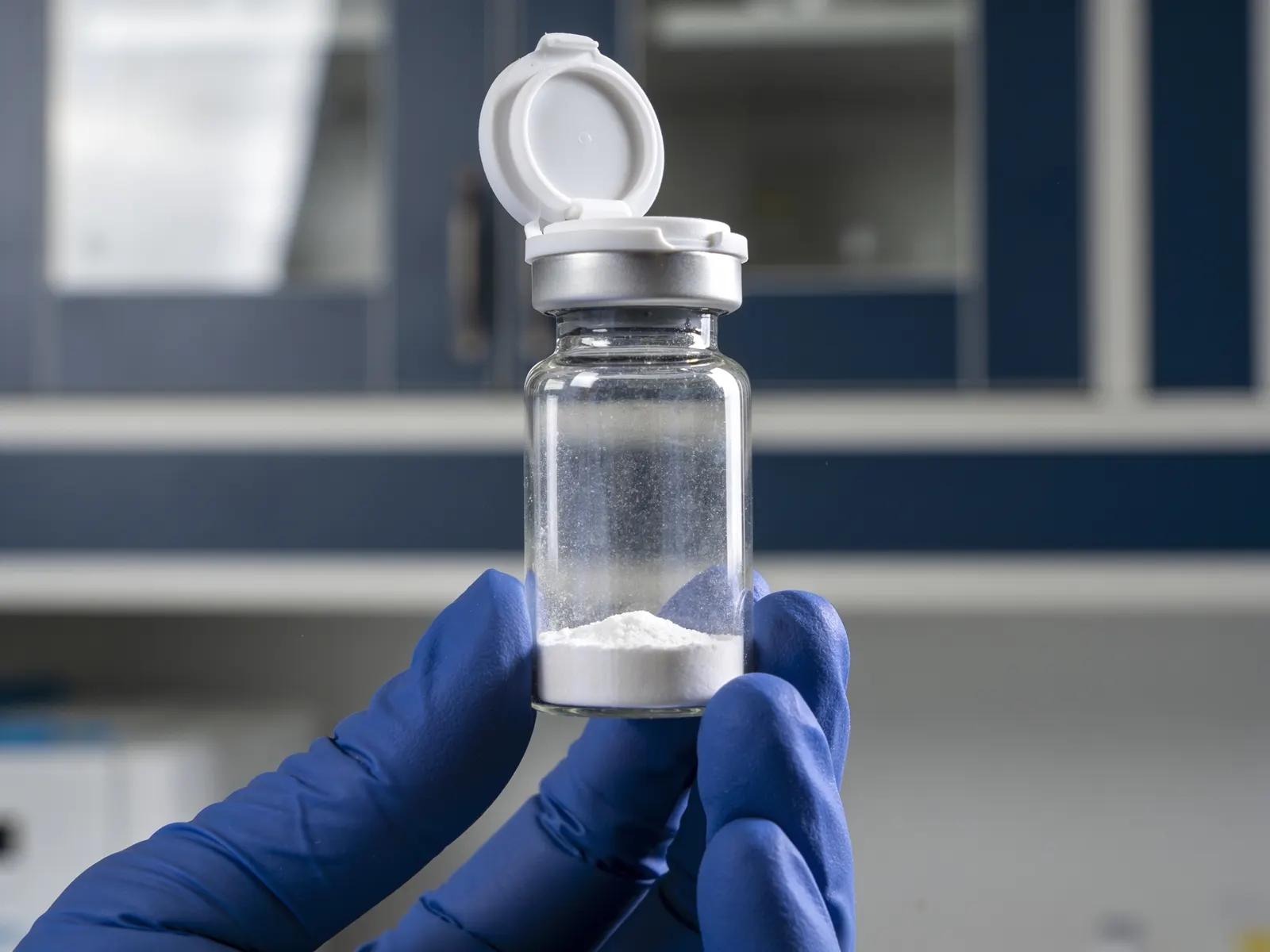
Freeze-drying removes most of the water from a peptide, and with it most of the chemistry that breaks peptides down in solution. That is why lyophilised material travels well and keeps for a long time. It isn’t why it keeps forever. Heat, moisture, light and air all still matter, and how a vial is handled after it arrives can matter more than how it was shipped.
This guide covers general laboratory practice. Stability is compound-specific: where a supplier’s handling notes, a compound’s data sheet or the published literature say something different for a particular peptide, follow them.
Why dry peptides still need care
Peptides degrade by a handful of well-understood routes:
- Hydrolysis of the backbone, which needs water;
- Oxidation of methionine, cysteine and tryptophan, driven by air, light and trace metals;
- Deamidation of asparagine and glutamine, which speeds up with moisture, heat and higher pH;
- Aggregation, where chains stick together, often after freeze–thaw or agitation.
Nearly all of them need water or run faster when warm. Keeping material cold, dry and dark slows every one. A sequence containing Met, Cys, Trp, Asn or Gln is generally more sensitive than one without, and a lipidated or very hydrophobic peptide brings its own handling quirks. Each entry in the compound library lists handling notes for that sequence.
When a delivery arrives
The first few minutes after a parcel arrives set up everything that follows.
- Check that each vial’s cap and seal are intact, and that nothing has leaked or cracked in transit.
- Match each label to your order and to its certificate of analysis: compound, declared amount, and the lot number if one is printed.
- Record the date received and the lot number before the vial goes into storage.
- Move vials to the fridge or freezer promptly, still in their outer box, which keeps light out.
A freeze-dried cake can look shrunken, cracked or loose and powdery after shipping. That is normal and doesn’t by itself indicate a problem. Most lyophilised peptides also tolerate a few days at room temperature in transit; weeks of heat are a different matter.
Temperature
For sealed, dry powder, colder is better, and steady is better still. The ranges below are the ones peptide manufacturers commonly publish in their handling guidance.
| Material | Common practice | Notes |
|---|---|---|
| Sealed powder, long term | −20 °C or colder | Often quoted as stable for a year or more when kept dry. −80 °C is used for longer storage. |
| Sealed powder, short term | 2–8 °C | Commonly fine for weeks. Useful between receipt and freezer. |
| Sealed powder, room temperature | Transit and brief handling only | Most lyophilised peptides tolerate days in transit. Don’t store them this way. |
| Working solution | 2–8 °C | Days to a few weeks, depending strongly on the compound. |
| Frozen aliquots | −20 °C or −80 °C | Weeks to months. Thaw each aliquot once. |
Moisture and desiccation
Lyophilised powder is hygroscopic: it pulls water from the air. The riskiest moment is opening a cold vial, because moisture condenses on anything colder than the room.
- Let a vial come to room temperature before opening it, ideally inside a desiccator or a sealed container, so condensation forms on the outside of the container rather than on the powder.
- Open it briefly, take what you need, and reseal it straight away.
- Store vials in a sealed container with a desiccant such as silica gel, and replace the desiccant when it is spent.
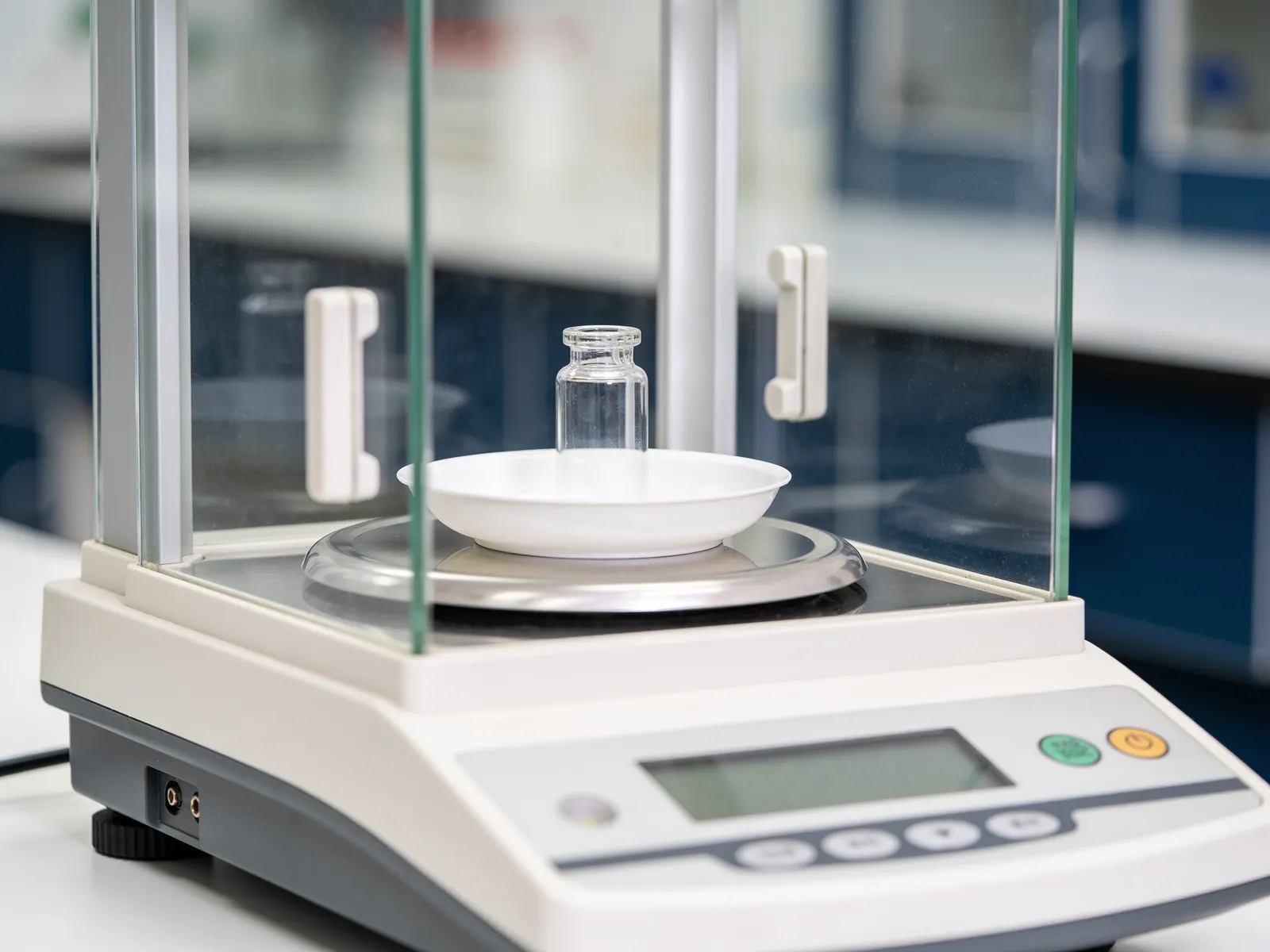
- If you weigh out portions of powder, work quickly on a clean, dry balance. Some labs flush the vial with dry nitrogen or argon before resealing.
Light and air
Tryptophan and tyrosine absorb ultraviolet light, and light can drive oxidation. Keep vials in their box, in amber tubes, or wrapped in foil, and don’t leave solutions on a sunlit bench. For oxidation-prone sequences, keep the headspace above a solution small, and use freshly prepared, degassed diluent where the protocol calls for it.
Freeze–thaw and aliquoting
Each freeze–thaw cycle can promote aggregation and gives the slower degradation routes another chance to act. The fix is to plan portions before you reconstitute, not after:
- Decide how much material each experiment needs, and how many experiments the vial should cover.
- Dissolve the whole vial once, to a concentration that makes those portions easy to measure.
- Divide the solution into single-use aliquots in low-binding tubes, then label and freeze them together.
- Thaw only the aliquots an experiment needs, and discard any remainder rather than refreezing it.
The reconstitution calculator does the arithmetic: the concentration a given volume of diluent produces, the volume that holds a set mass, and how many whole aliquots a vial makes. It works in mass, volume and concentration only, and shows every step of the working.
Once it’s in solution
Peptides degrade much faster in solution than as powder, and how much faster varies widely from one sequence to the next. In general terms:
- Sterile water, dilute acetic acid or a buffer suited to the assay are common choices of diluent; note which you used, since preservatives such as benzyl alcohol can affect cell-based work.
- Hydrophobic sequences may need a small amount of dilute acetic acid, DMSO or acetonitrile to dissolve first. Check the compound’s handling notes before you start.
- Several manufacturers’ handling guides suggest slightly acidic conditions, around pH 5 to 6, for storing peptide solutions, since deamidation and some oxidation run faster at higher pH.
- Swirl or roll the vial gently to dissolve the powder. Vigorous shaking can promote aggregation.
- Keep working solutions cold and their time in the fridge short. Discard any solution that turns cloudy or shows particles, unless the compound is known to form a suspension.
Labelling and logging
Good records are what let you rule storage in or out when a result looks odd. Label every vial and aliquot with at least:
- the compound and its lot or batch number;
- the concentration, and the solvent or diluent used;
- the date it was prepared, and the initials of whoever prepared it;
- where it is stored, if you keep more than one freezer or box.
Keep the certificate of analysis for each lot with your records, so a result can always be traced back to the material that produced it. Our guides to verifying a COA and purity versus content explain what that document can and can’t tell you. A minimum–maximum thermometer or a small data logger in the freezer completes the picture: it shows whether the temperature held while you weren’t looking.
Research use only. Everything on Vialwise concerns research-grade material sold for laboratory and analytical use only. It is not a registered medicine, is not supplied for human or veterinary use, and nothing here is medical advice. Nothing in this guide is legal advice either; where regulation matters to your work, get advice for your own situation.